
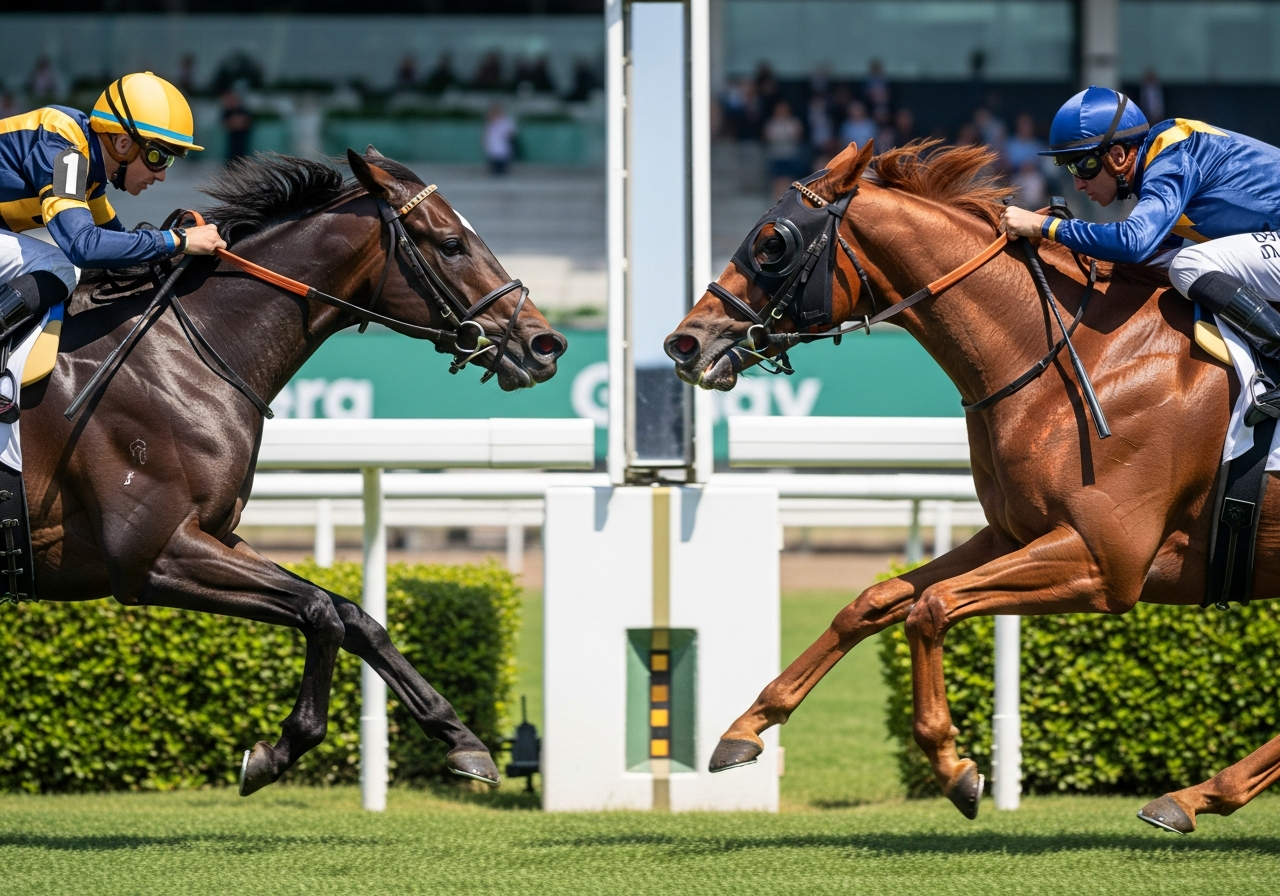
In the thrilling world of Indian horse racing, few moments create as much excitement and confusion as a dead heat. A dead heat occurs when two or more horses cross the finish line at exactly the same time, making it impossible for race officials to determine a clear winner even after reviewing photo finish technology. At prestigious tracks like Mahalaxmi in Mumbai, Bangalore Turf Club, and Hyderabad Race Club, these rare but dramatic finishes can significantly impact betting payouts and leave punters wondering how their stakes will be calculated.
Understanding dead heat rules is crucial for Indian bettors who want to maximize their returns and avoid disappointment when joint winners are declared. The Racing Commission of India Limited (RCIL) has established specific protocols for handling these situations, but individual bookmakers may apply variations that affect your final payout. Whether you’re backing a single horse to win or placing each-way bets across multiple runners, knowing how dead heat calculations work can mean the difference between a profitable day at the races and an unexpected loss. This comprehensive guide will walk you through every aspect of dead heat betting in Indian horse racing, from basic win bet calculations to complex exotic wagering scenarios.
What Is a Dead Heat in Horse Racing?
A dead heat in horse racing represents one of the most dramatic and rare outcomes possible on any racetrack. When horses finish so close together that race stewards cannot separate them using available technology, the result is declared a dead heat, with multiple horses sharing the same finishing position. In Indian racing, this situation typically arises when margins between horses are less than a nose, making visual separation impossible even with high-speed cameras and photo finish equipment.
The rarity of dead heats adds to their significance in Indian horse racing circles. Statistics from major Indian tracks show that genuine dead heats occur in less than 0.5% of all races, making them memorable events that often become talking points among racing enthusiasts for years to come. When dead heats do occur, they can happen at any finishing position, though dead heats for the win naturally generate the most attention and betting complications.
Dead heats fundamentally change how betting payouts are calculated, as stakes must be divided among the joint winners according to established mathematical formulas. This division ensures fairness for all bettors while maintaining the integrity of the wagering pools, though it often results in reduced payouts compared to what punters might expect from a single winner scenario.
How Photo Finishes Work in India
Indian racetracks employ sophisticated photo finish technology to determine race results with precision measured in thousandths of seconds. The primary system uses high-speed cameras positioned directly on the finish line, capturing images at rates exceeding 1,000 frames per second to create a continuous strip photograph showing exactly when each horse’s nose crosses the winning post.
Race stewards at tracks like Mahalaxmi and Bangalore analyze these photo finish images using specialized software that can magnify and enhance the crucial moments around the finish line. When stewards cannot detect any separation between horses after examining all available angles and enhancement options, they have no choice but to declare a dead heat, ensuring absolute fairness in the official result declaration.
Famous Dead Heats in Indian Racing History
- 1987 Indian Derby at Mahalaxmi Race Course – Malvado and Royal Falcon dead-heated for second place behind winner Razeen, creating memorable scenes in the winner’s enclosure
- 2003 Bangalore Derby – Thunder and Lightning shared victory with Storm Warning in the most famous three-way dead heat in Indian racing history
- 2012 Hyderabad Gold Cup – Desert Storm and Valley Crossing could not be separated after a thrilling stretch duel, with payouts split equally between supporters of both horses
- 2018 Indian St. Leger at Mumbai – Multistarrer and Excellent Choice dead-heated for the prestigious classic victory, marking the first dead heat in the race’s modern history
- 2020 Mysore Derby – Silver Bracelet and Golden Arrow finished in a dead heat that took stewards over ten minutes to confirm using enhanced photo finish technology
Basic Dead Heat Rules for Win Bets
| Scenario (Winners) | Stake Division | Payout Formula | Example (₹100 at 5/1) |
|---|---|---|---|
| Two-way dead heat | Stake ÷ 2 | (Stake ÷ 2) × (Odds + 1) | ₹350 total return |
| Three-way dead heat | Stake ÷ 3 | (Stake ÷ 3) × (Odds + 1) | ₹233.33 total return |
| Four-way dead heat | Stake ÷ 4 | (Stake ÷ 4) × (Odds + 1) | ₹175 total return |
| No dead heat (normal win) | Full stake | Stake × (Odds + 1) | ₹600 total return |
The fundamental principle behind dead heat calculations involves dividing your original stake by the number of joint winners, then applying the full odds to this reduced stake amount. This system ensures that while you receive a payout for backing a winner, the return reflects the fact that your selection shared the victory rather than winning outright.
Step-by-Step Win Bet Calculation
- Identify your original stake amount and the odds on your selected horse when you placed the bet
- Determine how many horses finished in the dead heat for first place from the official race result
- Divide your stake by the number of dead heat winners to calculate your effective stake
- Multiply your effective stake by your horse’s decimal odds to determine your total return
- Subtract your original stake from the total return to calculate your net profit from the dead heat situation
Dead Heat Rules for Each-Way Bets
Each-way betting in dead heat situations introduces additional complexity because both the win and place portions of your bet are affected differently. The win portion follows standard dead heat rules, with your stake divided by the number of joint winners, while the place portion requires separate calculations based on how many placing positions remain after accounting for the dead heat results.
Indian bookmakers typically offer each-way terms of 1/4 odds for places in races with 8-15 runners, and 1/5 odds in handicap races with 16 or more runners. When a dead heat occurs for any place position, these terms interact with the dead heat rules to create unique payout scenarios that can significantly impact your returns.
Understanding how dead heats affect each-way betting is particularly important in Indian racing because many punters favor each-way wagers as a form of insurance against their selections finishing just outside the winner’s circle. The mathematical calculations become more complex, but the potential for profit remains even when your horse doesn’t win outright.
Impact on Place Part in Dead Heats
| Dead Heat Position | Places Paid | Effective Stake % | Example Outcome |
|---|---|---|---|
| Dead heat for 1st (2-way) | 2 places taken, 1 remaining | 50% of place stake | Half payout on place bet |
| Dead heat for 1st (3-way) | 3 places taken, 0 remaining | 33.33% of place stake | One-third payout on place bet |
| Dead heat for 2nd (2-way) | 2 places taken, 0 remaining | 50% of place stake | Half payout if in dead heat |
| Dead heat for 3rd (2-way) | 1 place available for 2 horses | 50% of place stake | Half payout if in dead heat |
| Dead heat for 4th (2-way) | No places available | 0% – losing bet | No payout for place portion |
Dead Heat Calculation Examples
| Bet Type | Stake | Odds | Dead Heat (n) | Full Win Payout | Dead Heat Payout | Indian Bookie Note |
|---|---|---|---|---|---|---|
| Win only | ₹500 | 4/1 | 2-way | ₹2,500 | ₹1,750 | Betway, 10Cric standard |
| Each-way | ₹200 (₹100 × 2) | 6/1 | 2-way | ₹850 | ₹487.50 | 1/4 place terms applied |
| Win only | ₹1,000 | 8/1 | 3-way | ₹9,000 | ₹4,000 | Rare three-way scenario |
| Each-way | ₹300 (₹150 × 2) | 10/1 | 2-way | ₹1,950 | ₹1,218.75 | High odds dead heat benefit |
| Win only | ₹750 | 3/1 | 2-way | ₹3,000 | ₹2,250 | Short-priced dead heat |
| Place only | ₹400 | 12/1 | 3-way for 2nd | ₹1,600 | ₹800 | Place-only dead heat impact |
Real Indian Race Scenarios
Consider a hypothetical scenario at Mahalaxmi Race Course during the prestigious Indian Derby preparation races. You back “Mumbai Thunder” at 7/1 odds with a ₹500 win bet, expecting the horse to capitalize on favorable track conditions. However, the race develops into a thrilling finish between Mumbai Thunder and “Bangalore Express,” with both horses hitting the line simultaneously in an epic photo finish that takes stewards several minutes to review.
When the dead heat is officially declared, your ₹500 stake gets divided by two (₹250 effective stake), then multiplied by the decimal odds of 8.0 (7/1 + 1), resulting in a total return of ₹2,000 instead of the ₹4,000 you would have received for an outright victory. While this represents a significant reduction from the maximum possible payout, you still achieve a healthy profit of ₹1,500 from your original ₹500 investment.
A more complex scenario might unfold at Hyderabad Race Club during a competitive handicap where you place a ₹300 each-way bet (₹150 win, ₹150 place) on “Deccan Pride” at 12/1 odds. If Deccan Pride dead-heats for second place with another runner, your win portion loses entirely, but your place portion benefits from the dead heat calculation with ₹75 effective stake (₹150 ÷ 2) multiplied by the place odds of 4.0 (12/1 ÷ 4 + 1), returning ₹300 and ensuring you break even despite not winning the race.
Dead Heat Rules by Indian Bookmakers
| Bookmaker | Win Dead Heat | EW Place Terms | Min Payout | India-Specific |
|---|---|---|---|---|
| Betway India | Standard stake division | 1/4 odds, 3 places | ₹10 | RCIL compliance |
| 10Cric | Standard stake division | 1/4 odds, 3 places | ₹15 | Mumbai track focus |
| Bet365 | Standard stake division | 1/5 odds, 4 places (16+ runners) | ₹20 | Enhanced place terms |
| 22Bet | Standard stake division | 1/4 odds, 3 places | ₹5 | Lower minimum stakes |
| Royal Panda | Standard stake division | 1/4 odds, 3 places | ₹25 | Premium positioning |
Most established Indian bookmakers follow standardized dead heat rules to maintain consistency and comply with RCIL regulations, though subtle variations in place terms and minimum payouts can impact your overall returns. Understanding these differences becomes particularly important when comparing potential payouts across multiple betting platforms before placing significant stakes on horses you suspect might be involved in close finishes.
Variations in Place Terms
- Enhanced place terms during festival meetings at Mahalaxmi often extend to 1/5 odds and four places, providing better value for each-way punters during prestigious races like the Indian Derby and Oaks
- Bangalore Turf Club races may see some bookmakers offering extra place positions during their Summer Season, particularly in competitive handicaps with large fields exceeding 20 runners
- Minimum stake requirements vary significantly between operators, with some international bookmakers setting higher thresholds that may not suit casual Indian punters preferring smaller wagers
- Dead heat calculation rounding policies differ subtly, with some bookmakers rounding down to the nearest paisa while others round up, creating minor variations in final payouts that can accumulate over multiple bets
Official RCIL Stewards Rules
The Racing Commission of India Limited maintains strict protocols for dead heat declarations that all licensed tracks must follow to ensure consistency across Indian horse racing. RCIL rules require stewards to examine photo finish evidence for a minimum of five minutes before declaring any dead heat, with additional senior steward consultation mandatory for dead heats involving more than two horses.
Official RCIL guidelines also specify that dead heat declarations must be announced to the public within 10 minutes of the official finish time, allowing bookmakers sufficient time to adjust their payout calculations and inform punters of the revised betting returns. This standardized approach ensures transparency and maintains public confidence in the integrity of Indian horse racing results and associated betting markets.
Multi-Horse Dead Heats and Rare Cases
While two-horse dead heats are uncommon enough, three-horse or four-horse dead heats represent extraordinarily rare events that can create complex betting scenarios with significant payout implications. In Indian racing history, only a handful of confirmed three-way dead heats have occurred, with four-way dead heats being so rare that many veteran punters have never witnessed one during decades of following the sport.
The mathematical impact of multi-horse dead heats becomes particularly severe for win bet holders, as stakes are divided by three or four, dramatically reducing returns even when backing horses at generous odds. However, these situations can create unusual opportunities for place bet holders, especially in races where dead heats occur for positions other than first place, potentially creating scenarios where multiple horses share lower placing positions.
Exotic Bet Implications
| Bet Type | Dead Heat Effect | Payout Adjustment |
|---|---|---|
| Exacta (First Two) | Multiple winning combinations | Pool divided by valid combinations |
| Trifecta (First Three) | Exponentially more combinations | Severely reduced individual payouts |
| Quinella (Any Order) | Additional winning pairs created | Pool split among valid pairs |
| Place Accumulator | Reduced odds on affected leg | Lower overall accumulator return |
Tips for Betting During Dead Heat Risks
- Focus on each-way betting when races appear likely to finish with tight margins, as the place portion provides insurance against dead heat payout reductions on win bets
- Avoid backing short-priced favorites in competitive handicaps where multiple horses have similar chances, as dead heats with low-odds horses provide minimal profit even when successful
- Consider backing outsiders at generous odds during competitive sprint races, where dead heats can still provide substantial returns despite stake division
- Monitor weather conditions and track bias reports, as certain conditions increase the likelihood of close finishes and potential dead heats at specific Indian tracks
- Study past race results at venues like Mahalaxmi and Bangalore to identify patterns where dead heats occur more frequently, such as specific distances or race types
- Use multiple bookmakers to compare each-way terms, as enhanced place conditions can provide better value when dead heats affect place portions of your bets
- Consider place-only betting strategies during festival meetings where competitive fields increase dead heat probability while maintaining potential for profitable returns
Best Tracks for Each-Way Value
- Mahalaxmi Race Course, Mumbai – Premium place terms during major festivals, competitive handicaps, and historic Derby meeting provide excellent each-way opportunities with enhanced dead heat protection
- Bangalore Turf Club – Consistent track conditions and quality fields create ideal scenarios for each-way value betting, particularly during their prestigious Summer Season meetings
- Hyderabad Race Club – Regular competitive handicaps with large fields offer frequent each-way opportunities, while their modern facilities ensure accurate photo finish resolution for fair dead heat decisions
- Pune Race Course – Seasonal meetings feature quality racing with competitive margins that suit each-way strategies, especially during their traditional winter racing calendar
- Kolkata Race Course – Long-established track with experienced stewards provides consistent dead heat adjudication, making it reliable for punters seeking fair treatment in close finish situations
Common Dead Heat Myths in India
One of the most persistent misconceptions among Indian punters involves the belief that dead heat winners receive full payouts rather than divided stakes, leading to disappointment and confusion when actual returns fall short of expectations. This myth likely stems from casual racing fans misunderstanding the mathematical principles behind dead heat calculations, assuming that backing any winner guarantees the full advertised odds regardless of whether the victory is shared.
Another common fallacy suggests that photo finish technology can always separate horses in close finishes, making dead heats unnecessary in modern racing. However, even the most advanced systems used at premier Indian tracks have limitations when horses finish within milliseconds of each other, particularly when multiple horses hit the line simultaneously with identical nose positions at the winning post.
Some bettors incorrectly believe that dead heats favor bookmakers rather than punters, suspecting that operators manipulate results to reduce payouts. In reality, dead heat rules are mathematically fair and regulated by RCIL standards, ensuring that punters receive proportional returns based on their horses sharing winning positions rather than achieving outright victory. The reduced payouts reflect the objective reality that shared wins inherently carry less value than solo victories.
How Technology is Changing Dead Heats
Advanced photo finish systems being implemented across major Indian tracks are reducing the frequency of dead heats through enhanced image resolution and frame rates exceeding 2,000 per second. These technological improvements allow stewards to detect separations as small as millimeters between horses, resolving many finishes that would have been declared dead heats under previous systems.
However, technology has also led to more accurate dead heat declarations when horses truly finish simultaneously, eliminating controversial decisions where close finishes were previously awarded to single winners despite unclear photographic evidence. Modern Indian racing thus experiences fewer dead heats overall, but those that are declared carry greater certainty and acceptance among punters and racing participants, maintaining confidence in the integrity of results and associated betting markets.